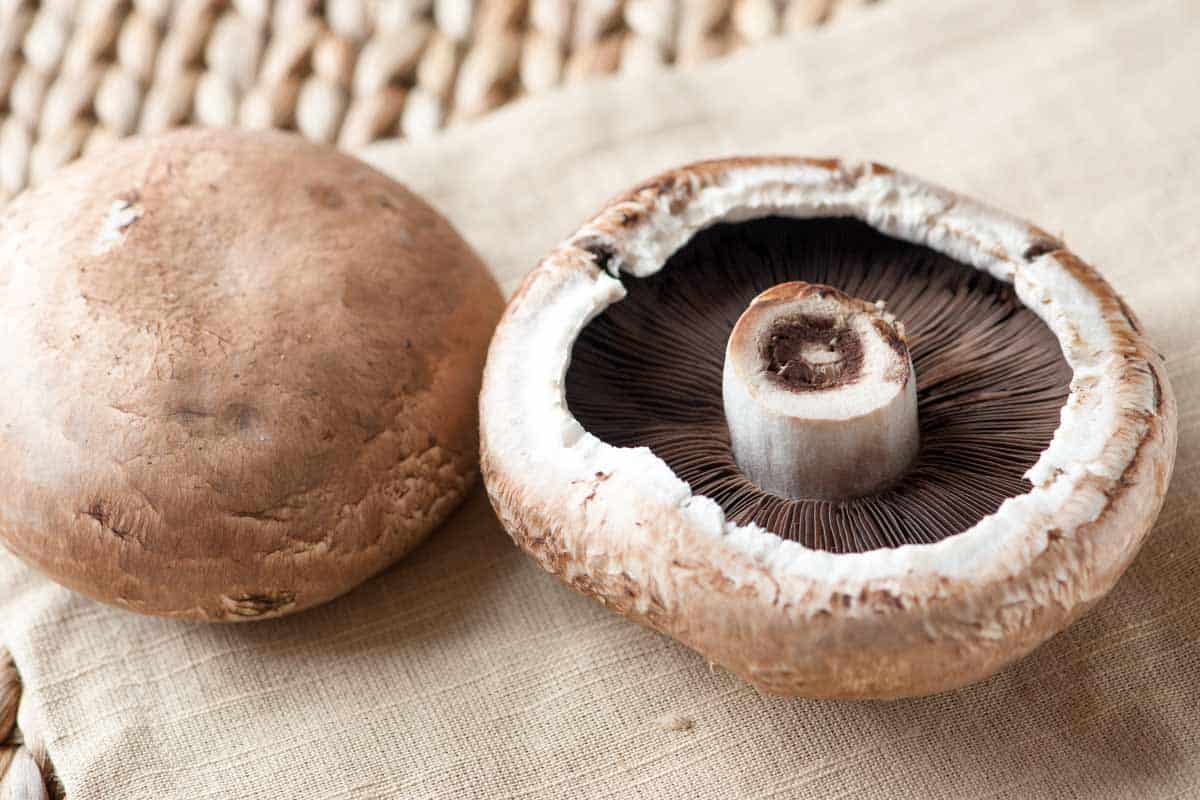
Portobello Mushroom
Agaricus bisporus
Habitat
Europe, North America, and parts of Asia
Season
late spring through autumn
Regions
North America, Europe
Medicinal
Yes
Important Safety Warning
must be cooked
Harvest Details
Habitat & Origin
Europe, North America, and parts of Asia
Regions
North America, Europe
Identification Details
Cap & Color: Dry, pale, tan, or brown caps that lack bright, glaring colors (avoid neon reds, blues, or purples).Gills: Free from the stem (not running down it). Young gills start off pale or pinkish, turning into a rich, deep chocolate-brown as the mature spores drop. Stem & Ring: The stem features a distinct ring (annulus) or skirt, which is the remnant of the partial veil that protected the gills during its button stage. The stem also tends to snap cleanly away from the cap. Spore Print: Dark chocolate-brown to purplish-brown.
Foraging Tips
Foraging Tips
While true wild Agaricus species can be found in fields and meadows, it is strongly discouraged for amateur foragers to harvest wild portobello-lookalikes due to dangerous toxic look-alikes.
Microclimates
Microclimates
Moisture & Humidity: Mycelium growth is deeply sensitive to shifts in microclimate. Extended dry spells or droughts cause the underground network to go dormant, delaying fruiting. Conversely, sudden excessive rainfall combined with stable, mild temperatures (15°C to 24°C) triggers rapid, heavy flushes of mushrooms.
Soil Health: As saprotrophs, wild Agaricus species play a vital ecosystem role by breaking down lignin and cellulose in dead plant matter, recycling nitrogen and carbon back into pasture and woodland soils.
Nutritional Metrics
Nutritional Profile
4 metricsCalories22
protien3.0
Carbohydrates3.3
Fat0.5
Medicinal Value
Medicinal Value
Antioxidant Properties: Contains exceptionally high levels of ergothioneine and glutathione—master antioxidants that protect cells from oxidative stress and free radical damage. Immune Modulation: Rich in beta-glucans (complex polysaccharides) that stimulate macrophage activity and support overall immune defense. Metabolic & Blood Sugar Support: Preclinical studies indicate that bioactive compounds in Agaricus bisporus help improve insulin sensitivity, assist in lipid metabolism, and help regulate blood glucose levels. Anti-Inflammatory & Anti-Aromatase: Contains compounds capable of mildly inhibiting aromatase, which researchers study for its potential role in lowering excess estrogen levels
Recipes & Pairings
Home Pairings
Ingredients
4 large portobello mushrooms, stems removed and gills gently scooped out
1 cup ricotta cheese (or cream cheese for a richer texture)
1/2 cup grated Parmesan or mozzarella cheese
3 cloves garlic, finely minced
1/2 cup panko breadcrumbs (or crushed gluten-free crackers)
2 tbsp fresh parsley, chopped
1 tbsp fresh basil or oregano, minced
2 tbsp extra-virgin olive oil
Salt and freshly ground black pepper to taste
Instructions
Preheat the Oven: Set your oven to 200°C (400°F). Line a baking sheet with parchment paper.
Prep the Caps: Clean the portobello caps with a damp cloth. Brush both the top and bottom of each cap lightly with olive oil, and season the inside cavities with salt and pepper. Place them gill-side up on the baking sheet.
Mix the Filling: In a mixing bowl, combine the ricotta cheese, half of the Parmesan/mozzarella cheese, minced garlic, chopped parsley, basil, and a pinch of salt and pepper. Stir until thoroughly blended.
Stuff the Mushrooms: Spoon an equal amount of the cheese mixture into the cavity of each portobello cap, pressing it down slightly so it fills the space evenly.
Add the Topping: In a small bowl, toss the panko breadcrumbs with the remaining olive oil and the rest of the Parmesan cheese. Sprinkle this crisp topping evenly over the stuffed cheese filling on each mushroom.
Bake: Bake in the preheated oven for 18 to 22 minutes, or until the mushrooms are tender
Additional Context
Fun Facts
The Maturity Spectrum: White button mushrooms, cremini (brown buttons), and portobellos are the exact same biological organism (Agaricus bisporus). White buttons are harvested young; creminis are a slightly older brown strain; portobellos are fully mature specimens with wide-open caps and exposed gills.
Fleshy Texture: Because of their dense, meaty texture and umami profile, portobellos are widely used as a plant-based substitute for meat steaks and burger patties.
Ready to source Portobello Mushroom?
Browse active lots from verified foragers in the marketplace.
