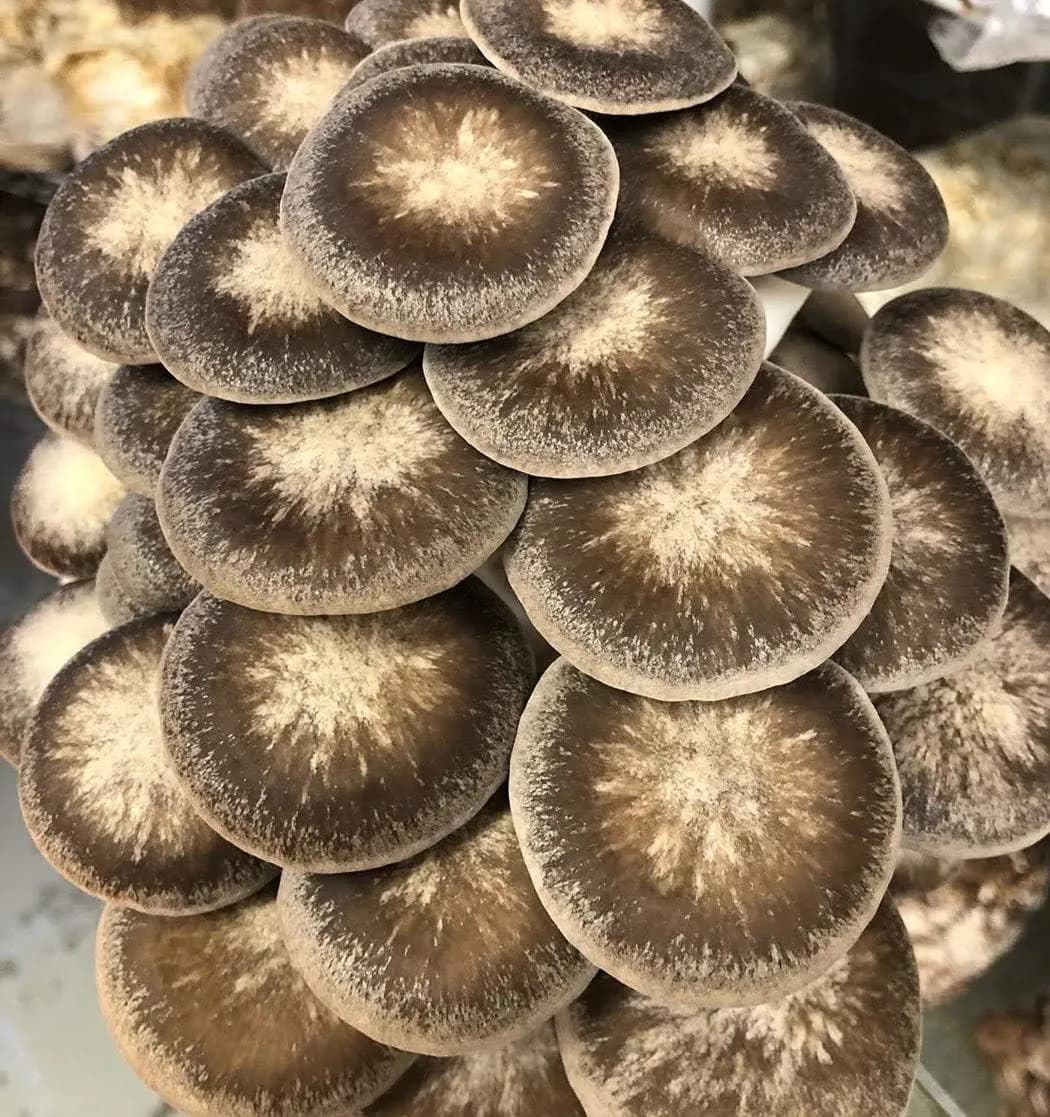
black pearl
Pleurotus ostreatus hybrid (Black Pearl King Oyster)
Harvest Details
Black Pearl King Oysters are a Japanese‑developed hybrid combining the thick, meaty stem of King Oyster with the soft, dark cap of Oyster mushrooms.
They are fully cultivated, grown indoors using hardwood sawdust blocks, soy hull supplementation, controlled humidity, and precise airflow.
No wild populations exist — all production is intentional, climate‑controlled, and optimized for yield and texture.
Black Pearls fruit year‑round due to indoor cultivation.
Typical grow cycle:
14–21 days colonization
7–10 days fruiting
Dense cluster formation
Stable yields regardless of outdoor climate
Producers often run continuous cycles for consistent supply.
Black Pearls are grown worldwide in indoor mushroom farms.
Most U.S. production occurs in:
Pacific Northwest
Midwest specialty farms
East Coast boutique cultivators
International production is strong in Japan and Korea, where the hybrid originated.
Macro:
Dark gray to charcoal caps
Smooth, velvety surface
Thick, dense stems
White decurrent gills
Multi‑cap clusters
Micro:
Spore print: white
Spore shape: cylindrical
Hyphae: monomitic Pleurotus structure
Foraging Tips
Not forageable. All Black Pearls are cultivated — no wild foraging tips apply.
Preservation & Storage
Store in paper or vented containers
Avoid airtight packaging
Refrigerate immediately
Use within 7–10 days
Trim dry edges before cooking
Sauté before freezing for best texture
Dehydration best for broths (texture loss)
Microclimates
Black Pearls respond strongly to:
High humidity (85–95%)
Moderate temperatures (55–65°F)
Strong fresh air exchange
Lower CO₂ for tighter stems
Higher CO₂ for broader caps
Microclimate shifts can dramatically change cap size and stem density.
Nutritional Metrics
Medicinal Value
Black Pearls share functional benefits with other Pleurotus species:
Immune‑supportive beta‑glucans
Antioxidant activity
Potential cholesterol‑lowering compounds
High potassium for cardiovascular support
Not considered a medicinal mushroom, but nutritionally beneficial.
Recipes & Pairings
Fats: Olive oil • butter • avocado oil
Aromatics: Garlic • • shallot
Herbs: Parsley • thyme • chives
Umami Boosters: Soy sauce • Worcestershire • miso paste
Acid: Lemon • apple cider vinegar
Dairy: Parmesan • cream • cheddar
Pantry Staples: Rice • pasta • potatoes • eggs • frozen vegetables
Comfort Ingredients: Broth • noodles • bread • canned tomatoes
HOME RECIPE 1
Easy Garlic‑Butter Black Pearls on Toast
Yield: 2 servings
Ingredients
8 oz Black Pearl mushrooms, sliced
2 tbsp butter
2 garlic cloves, minced
Salt & pepper
2 slices bread
Fresh parsley (optional)
Instructions
Melt butter in a pan over medium heat.
Add mushrooms and cook until browned, 6–8 minutes.
Add garlic; cook 1 minute.
Season with salt and pepper.
Spoon over toasted bread and top with parsley.
Home Note: This is the simplest way to show off their natural umami.
HOME RECIPE 2
Weeknight Soy‑Sesame Stir‑Fry
Yield: 2–3 servings
Ingredients
10 oz Black Pearl mushrooms, sliced
2 cups mixed vegetables (fresh or frozen)
1 tbsp olive oil
1 tbsp soy sauce
1 tsp sesame oil
1 tsp garlic powder
Cooked rice or noodles
Instructions
Heat oil in a pan.
Add mushrooms; cook until browned.
Add vegetables; cook until tender.
Stir in soy sauce, sesame oil, and garlic powder.
Serve over rice or noodles.
Home Note: Fast, cheap, and perfect for meal prep.
HOME RECIPE 3
Air‑Fried Black Pearls (Crispy Snack or Side)
Yield: 2 servings
Ingredients
8 oz Black Pearl mushrooms, torn into pieces
1 tbsp olive oil
Salt & pepper
Optional: paprika or garlic powder
Instructions
Toss mushrooms with oil and seasonings.
Air‑fry at 400°F for 8–10 minutes until crisp.
Serve immediately.
Home Note: The easiest “crispy mushroom bites” you’ll ever make.
Additional Context
Black Pearls originated in Japan as a deliberate hybridization of King Oyster and Oyster mushrooms. The goal was to create a mushroom with:
The meaty density of King Oyster
The tender cap structure of Oyster
The yield stability required for commercial cultivation
They quickly became popular in Asian cuisine, especially in ramen, donburi, and grilled dishes. In Western cuisine, they gained traction through plant‑forward cooking, where chefs discovered their ability to mimic scallops, steak strips, and shredded meats.
Today, Black Pearls are considered a premium cultivated mushroom with strong appeal in both traditional and modern culinary settings.
Black Pearls respond strongly to environmental variables:
Humidity (85–95%)
Higher humidity produces broader caps and softer edges.
Lower humidity tightens stems and increases density.
CO₂ Levels
High CO₂ → larger caps, more Oyster‑like.
Low CO₂ → thicker stems, more King Oyster‑like.
Airflow
Strong airflow encourages tighter clusters and reduces cap overlap.
Temperature (55–65°F)
Cooler temps produce darker caps and firmer stems.
Growers use these microclimate shifts to tailor appearance and texture for specific markets.
Developed in Japan as a specialty hybrid
Famous for “vegan scallops” due to thick stems
Spores are white
No toxic look‑alikes
Highly favored in plant‑based cuisine
Black Pearl mushrooms have a dual‑texture profile: tender, velvety caps paired with thick, meaty stems that behave like a plant‑based protein. Their hybrid lineage gives them exceptional heat tolerance — they brown deeply, crisp at the edges, and maintain structure even under aggressive searing or roasting.
They excel in:
High‑heat searing
Grilling
Ramen bowls
Braises
Vegan “meat” applications
Thick‑cut plating
Their natural smoky‑umami flavor intensifies when caramelized, making them ideal for dishes requiring depth and savory richness.
Black Pearls perform extremely well in your marketplace:
High customer familiarity
Strong chef demand
Stable pricing
Year‑round availability
Excellent for bundles (ramen, pasta, plant‑forward kits)
Works across all seller types: cultivators, chefs, retailers, producers
They are of the most versatile cultivated mushrooms in your catalog.
“Black Pearls are of the most reliable mushrooms in the kitchen. Their stems sear like scallops, their caps roast beautifully, and their flavor stands up to bold sauces. They’re a dream ingredient for plant‑forward menus.”
Although not wild, cultivators note:
Very stable yields
Strong resistance to contamination
Respond well to fresh air exchange
Produce dense, uniform clusters
Easy to harvest and trim
Ready to source black pearl?
Browse active lots from verified foragers in the marketplace.
