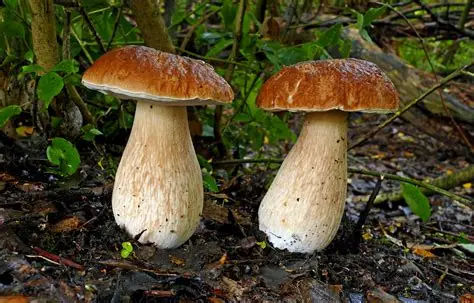
King Bolete
Boletus edulis
Harvest Details
King boletes thrive in mature, undisturbed forests where deep organic soil layers support strong mycorrhizal networks. They form symbiotic relationships with a wide range of trees, making them one of the most versatile and widespread wild edible mushrooms. Primary Habitat Types: Coniferous Forests Spruce, fir, pine, and hemlock stands — especially older forests with thick needle duff. These environments produce some of the largest and most flavorful porcini. Deciduous Forests Oak, beech, birch, chestnut, and hazelnut associations. These habitats often produce lighter‑colored caps and slightly sweeter aroma. Mixed Woodlands Forests containing both conifers and hardwoods often yield the most consistent flushes. Soil & Ground Conditions Deep humus layers rich in decomposed organic matter Well‑drained soils — never swampy or compacted Moist but not saturated ground following rainfall Moss beds, leaf litter, and needle duff that retain humidity Microhabitat Indicators Edges of old game trails Bases of large, mature trees Slightly raised mounds where roots create moisture pockets Areas with filtered sunlight rather than full shade or full sun Forest Age & Health King boletes prefer stable, mature ecosystems with long‑established tree root systems. They are less common in: Recently logged areas Young plantations Disturbed or compacted soil zones Their presence often indicates a healthy, balanced forest with strong fungal biodiversity.
King boletes are one of the most widely distributed wild mushrooms in the world, appearing across North America, Europe, and parts of Asia. Their broad range reflects their ability to form mycorrhizal partnerships with many tree species, from conifers to hardwoods. Pacific Northwest (Primary U.S. Region) Washington Oregon Northern California Idaho Western Montana British Columbia These forests produce some of the largest and most flavorful porcini, especially in mature spruce, fir, pine, and hemlock stands. Rocky Mountains Colorado Wyoming Montana Utah Often found at mid to high elevations, especially after monsoon moisture. Northern U.S. & Great Lakes Minnesota Wisconsin Michigan Upstate New York Common in mixed hardwood forests (oak, birch, beech). Northeastern U.S. Maine Vermont New Hampshire Thrives in cool, moist forests with birch, spruce, and fir. Alaska Produces exceptionally large specimens in coastal and interior spruce forests. Europe (Global Heartland of Porcini) Italy France Germany Poland Scandinavia Balkans Porcini are deeply rooted in European culinary tradition and appear in both conifer and hardwood forests. Asia Japan Korea Northeastern China Russian Far East Often found in mountainous conifer belts with cool, stable climates.
Foraging Tips
King boletes are one of the most rewarding mushrooms to forage, but they require timing, patience, and a sharp eye. Their season is short, their quality changes fast, and insects love them — making early detection essential. 1. Watch the Weather Fruiting begins 7–10 days after steady rainfall.
Ideal conditions:
Day temps 55–70°F Night temps 40s–50s°F Moist but not saturated soil A single warm spike can cause rapid insect damage, so check forests quickly after rain. 2. Target the Right Trees King boletes fruit near: Spruce Fir Pine Hemlock Oak Birch Beech Look for mature trees with deep duff layers — young forests rarely produce porcini. 3. Learn the “Porcini Shape” Even when buried, porcini show: A rounded dome pushing through duff A thick, pale stem base Slight cracking on the cap when dry A sponge layer (pores) instead of gills Buttons often hide under needles or moss — gently lift duff to check. 4. Check the Ground Carefully Porcini often fruit: Along game trails On moss beds At the base of large trees On north‑facing slopes In micro‑pockets where moisture lingers If you find one, slow down — porcini often grow in clusters or scattered patches within 20–50 feet. 5. Harvest Early Insects target porcini aggressively. To get premium quality: Harvest young buttons whenever possible. Avoid over‑mature caps with soft sponge layers. Check stems for worm tunnels — even beautiful caps can be compromised. 6. Clean in the Field Porcini bruise easily. Best practice: Brush off dirt and duff immediately. Trim the stem base to remove soil. Keep them dry — moisture shortens shelf life. 7. Use Proper Storage Paper bags, never plastic. Keep cool and dry. Refrigerate as soon as possible. For long trips, use breathable baskets. 8. Know the Season Shifts Early season: Smaller, firmer, lighter caps. Peak season: Large, meaty porcini with strong aroma. Late season: More insect damage, darker caps, softer sponge. 9. Avoid Look‑Alikes Porcini have no deadly look‑alikes in North America, but avoid: Bitter boletes (taste a tiny piece — extremely bitter) Red‑pored boletes (often stain blue and can cause GI upset) Porcini have white to yellow pores, never red or orange.
Preservation & Storage
Microclimates
Nutritional Metrics
Medicinal Value
Recipes & Pairings
Additional Context
Ready to source King Bolete?
Browse active lots from verified foragers in the marketplace.
